
JB-SG RTS Link fares are expected to be announced in January 2027, 1 month before passenger service begins, says Johor official

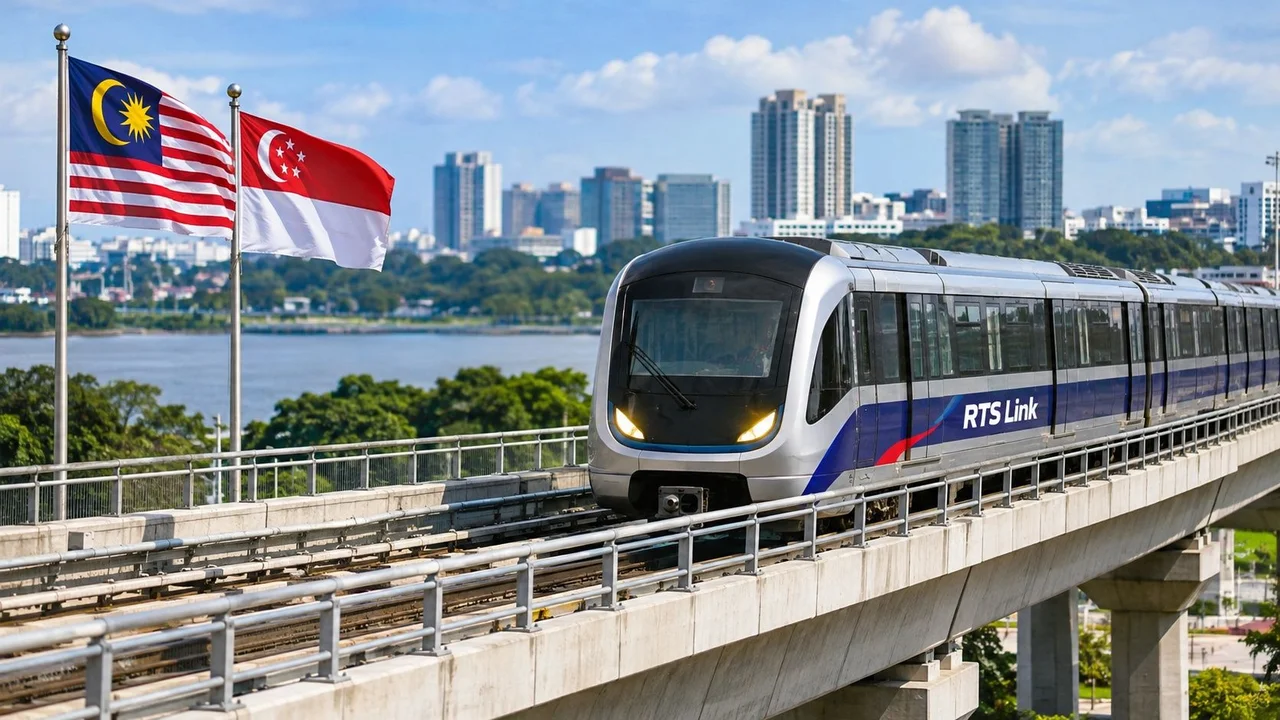
RTS Link train travelling on an elevated railway between JB, MY & SG
SINGAPORE/MALAYSIA: Commuters travelling between Johor Bahru and Singapore may learn how much their new rail journey will cost in January 2027. Malaysia’s Transport Ministry is expected to announce the official fares one month before the Johor Bahru-Singapore Rapid Transit System (RTS) Link begins operations in February.
Johor State Public Works, Transport, Infrastructure and Communications Committee chairman Mohamad Fazli Mohamad Salleh said discussions were ongoing between RTS Operations Pte Ltd (RTSO) and both governments.
Malay Mail reported on Nov 25 that earlier media reports in February 2026 had estimated fares at S$5 to S$7 per trip. However, neither one-way nor return fares have been confirmed. Mohamad Fazli gave the update while answering questions during a sitting of the Johor state assembly.
Johor Bahru faces mounting traffic pressure
The new rail service is expected to help commuters, but Johor Bahru must also prepare its roads and public transport network.
According to the 2025 Traffic Congestion Index, the city ranked fifth. Its congestion index increased from 36.9% in 2024 to 39.5% in 2025.
Time lost during peak hours also rose from an estimated 61 to 65 hours. Mohamad Fazli said around 400,000 Malaysians travel across the Johor Causeway daily to work in Singapore.
More buses and rail services planned
The Johor Public Transport Corporation is coordinating passenger movement around RTS Bukit Chagar Station.
Plans include pedestrian overhead bridges and restrictions on private vehicles along Jalan Bukit Chagar to make room for feeder buses.
Additional commuter services will cover two routes, with 10 daily trips between Paloh and JB Sentral and four between Kempas Baru and Pasir Gudang. Johor also has 168 BAS.MY buses and 39 Bas Muafakat Johor buses.
Road improvements target long-term congestion
Short-term measures include smart traffic lights at 210 intersections and a six-kilometre contra-flow lane along Jalan Skudai.
Newsletter
Get updates straight to your inbox
A tidal-flow system for commercial vehicles crossing the Causeway is scheduled to start on Dec 1.
Longer-term plans include a proposed 36.2-kilometre Elevated Autonomous Rapid Transit system with 22 stations.
Six major road corridors across Greater Johor Bahru are also being considered for upgrades.
The RTS Link will make cross-border travel easier only if passengers can reach stations without spending hours in traffic. Better fares, feeder buses and road planning must work together.