
IN FULL: WP MP Leon Perera extols the need for an independent ombudsman in Parliament

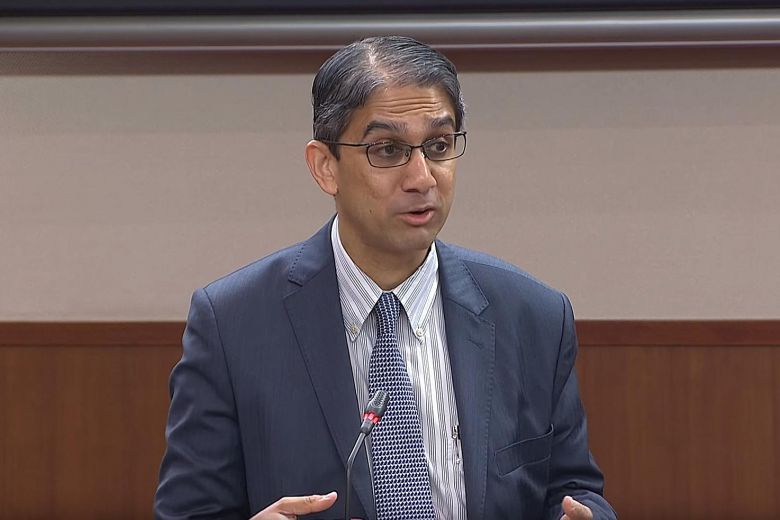
Workers' Party (WP) MP Leon Perera extolled the need for Singapore to create the office of an independent ombudsman, as he rose to speak in support of party chairman Sylvia Lim's “Justice For All: Enhancing Equity In The Criminal Justice System” motion in Parliament on Wednesday (4 Nov).
Ms Lim had called on the House to affirm that “fairness, access and independence are cornerstones of Singapore’s justice system.” It also urged the government to “recognize and remedy its shortcomings" to enhance the justice system and facilitate a review of the system.
Mr Perera, who serves at Aljunied GRC alongside Ms Lim, spoke on why Singapore needs an independent ombudsman and disputed the arguments against the creation of such a role. Read his speech in full here:
"Mr Speaker sir, fairness, access and independence should be affirmed as cornerstones of Singapore’s justice system.
In pursuing these goals, we should address shortcomings and blind spots in our current institutional matrix of laws, regulations, policies and practices relating to justice. I shall focus my speech on only one recommendation that I would argue would advance us significantly towards that goal – creating the office of an Ombudsman.
What we are proposing
The Workers’ Party has advocated for setting up the office of an independent Ombudsman in our GE2015 and GE2020 manifestoes. In its GE2011 manifesto, the Workers’ Party proposed the establishment of an independent police complaints commission for some of the same reasons.
An Ombudsman would function as an independent office to investigate complaints about unfair administrative decisions or actions of a public agency, including delay, rudeness, negligence, arbitrariness, inconsistency, oppressive behaviour or unlawfulness.
Parti Liyani’s case has raised the question of wider access to the criminal justice system and avenues of redress on the part of those with lesser means. An Ombudsman would provide access to an independent public office with the remit and resources to investigate potential wrong-doing, errors, lapses or weaknesses in the conduct of public officials. The office of the Ombudsman would be open to Singaporeans of all backgrounds and income profiles.
The remit of the Ombudsman, in our proposal, would extend to the conduct of all public servants, including the Police and the prosecution service. In so far as the Police are concerned, this role has parallels with that of independent police complaints commissions or councils found in other jurisdictions such as the UK and Hong Kong.
However the Ombudsman would not have the authority to investigate complaints against the judiciary, so as to protect the vital tenet of judicial independence from any potential for inappropriate external interference.
Past public discussion on the establishment of an Ombudsman
Sir, the idea of creating an office of the Ombudsman in Singapore is not new by any means. Let me recount some highlights of past public discussion about the proposal to establish an office of the Ombudsman in Singapore.
This idea has, in fact, been debated publicly and in this House on many occasions.
The 1966 Wee Chong Jin Constitutional Commission recommended instituting an Ombudsman to ensure an independent check on the acts and decisions of the public sector, apart from the principle of Ministerial responsibility.
The Government responded that it was not rejecting the proposal but that it was not the right time to institute it because citizens had not yet developed a clear understanding of their rights and obligations. According to then Law Minister EW Barker, such an institution would be “flooded by complaints by people who do not know what are the limits of his jurisdiction”.
In 1990, then MP Mr Davinder Singh called for the establishment of the Ombudsman, noting that “it is in our interest… that we develop a system of accountability, a system which will assure the man-in-the-street that if he has a grievance, he can take it to a person or a body who has a right or has power to look into it, look into the files of the Ministry, if necessary, or bring a complaint of shoddy treatment up to the superiors.”
In 1994, then backbencher and current Law Minister Mr K Shanmugam also raised it in Parliament, suggesting that an Ombudsman “might actually help retain the confidence of the people in the system… to have an intermediate institution which can provide for a quick and effective remedy, and reserving the final appeal to the Minister for extreme cases.”
In 2011, then MP and now Leader of the Opposition Mr Pritam Singh called for the establishment of an Ombudsman during the debate on the President’s address, noting that former President Mr Tony Tan had revived interest in this during his Presidential campaign.
Mr Pritam asked a PQ in February 2012 as to whether the Government will consider whistle-blower protection legislation and the institution of a national Ombudsman to act as a layer of deterrence against wayward civil servants. In response, then DPM Teo Chee Hean stated that there are multiple channels for raising irregularities.
Independent bodies like the Public Service Commission (PSC), the Auditor- General’s Office (AGO) and CPIB are involved in the process.
Other MPs who have spoken in favour of the idea of an Ombudsman over the years include Mr Zaqy Mohamed in 2013, my colleague then NCMP and now MP Mr Dennis Tan in 2016, NMP Ms Kuik Shiao-Yin in 2016, NMP Mr Kok Heng Luen in 2017 and myself in 2018.
Arguments for an Ombudsman
There are a number of arguments for an Ombudsman in the Singapore context. I shall attempt to summarise these as follows.
An Ombudsman could undertake an enquiry that is independent from, and seen to be independent from, the public sector agency which is the subject of a complaint, setting it apart from internal enquiries that occur within Ministries or Statutory boards – by the Quality Service department, for example. Having access to such a check would, in fact, bolster the standing of the public service.
An Ombudsman would be equipped with investigative resources and a remit to independently investigate complaints that organizations like the Auditor- General’s office and Public Service Commission do not currently have.
An Ombudsman may uncover policy gaps or institutional shortcomings that are not related purely to corruption, accounting or corporate governance, as dealt with by the CPIB and AGO, as I argued in Parliament in 2018.
The office of the Ombudsman could therefore table a review paper every year analysing, in aggregate, the cases it had dealt with, describing any systemic patterns discerned and putting forth evidence-driven recommendations for systemic change in how the public service interfaces with citizens.
In 2016, during the public discussion on the Constitutional amendments to the Elected Presidency scheme, scholar Chirag Agarwal published an op-ed essay outlining how an Ombudsman could benefit Singapore. To paraphrase, he argued:
The delivery of public services has become more complex and citizens have become more demanding. Parliament has had to address specific incidents involving government agencies.
An ombudsman should be able to investigate such incidents in the first instance and recommend corrective action where necessary, while the Government focuses on developing sound public policy. The Government could then consider any policy recommendations made by the ombudsman in its annual report.
An ombudsman could also quash unsubstantiated claims and vicious attacks on the public service by conducting a transparent and independent investigation into any allegation.
The transparency and independence of the Ombudsman will help build trust in the Government.
Examples from around the world
Next, I would like to consider examples of other jurisdictions that have created the office of an Ombudsman or its equivalent.
A 2018 OECD Working Paper noted that almost 30% of governments have included independent institutions like Ombudsman offices to foster a more “open state”, which the OECD Recommendation of the Council on Open Government defines as:
“when the executive, legislature, judiciary, independent public institutions, and all levels of government – recognising their respective roles, prerogatives, and overall independence according to their existing legal and institutional frameworks – collaborate, exploit synergies, and share good practices and lessons learned among themselves and with other stakeholders to promote transparency, integrity, accountability, and stakeholder participation, in support of democracy and inclusive growth.”
Notably, 96% of Ombudsman institutions studied in this report focus on complaints against the public administration and 67% also conduct the mediation of such complaints between citizens and the public administration.
A 2011 report by the Asian Development Bank (ADB) noted that most Asian Ombudsman Association (AOA) member institutions focus on the following mandates: providing redress for individual complainants; addressing systemic issues to improve public administration; enforcing accountability in government.
The ADB report noted that an Ombudsman can be established either under the Constitution, by statute or administrative regulations. Some relevant AOA member institutions of interest and their legal basis include:
The Ombudsman of Indonesia, created under Presidential Issuance (Presidential Decree No. 44) and Article 7 of Law No. 37 (2008); Office of The Ombudsman of Hong Kong, created under the Ombudsman Ordinance (Cap. 397, 1989); Malaysia’s Public Complaints Bureau, created under Administrative Circular No. 4, 1971; and The Philippines’ Office of the Ombudsman, created under the 1987 Constitution and Republic Act No. 3019, 1987.
I shall highlight two examples for more detailed treatment here – Hong Kong and Australia.
Established in 1989 by the Ombudsman Ordinance in Hong Kong, the Ombudsman monitors public governance. The Office strives to improve the quality of public administration and enhance the culture of service through independent, objective and impartial investigation into complaints received and by self-initiated studies in Hong Kong.
The Hong Kong Ombudsman has powers to:
- investigate complaints from aggrieved persons about maladministration by the Government departments/agencies and public bodies;
- investigate complaints against Government departments/agencies for non-compliance with the Code on Access to Information; and
- initiate direct investigation into issues of potentially wide public interest and concern.
Next, let me turn to Australia. The Office of the Commonwealth Ombudsman aims to safeguard the community in its dealings with the Australian Government. It is responsible for ensuring that the actions of agencies are fair and responsible by:
- handling complaints;
- conducting investigations;
- performing audits and inspections; and
- encouraging good administration.
The office of Commonwealth Ombudsman was created by the Ombudsman Act 1976. The Ombudsman Act provides that the Ombudsman is to investigate the administrative actions of Australian Government departments/agencies.
The Ombudsman is also the Law Enforcement Ombudsman and can investigate complaints about the actions of the Australian Federal Police (AFP) members and about the policies, practices and procedures of the AFP as an agency. If a person is dissatisfied after making a complaint to the AFP, it can make a complaint to the Ombudsman. The Ombudsman reports to Parliament, at least annually, on the comprehensiveness and adequacy of the AFP’s complaint handling.
How an Ombudsman will function
Sir, I would like to talk about next steps. I have argued for the creation of an office of independent Ombudsman in Singapore to investigate complaints against public servants.
We propose submitting the idea of creating such an office as an item to be considered in the external review described by my Party Chair and MP Ms Sylvia Lim. The review process could consider the role such an Ombudsman could play in our current eco- system of laws, regulations and practices, in the context of the questions raised by the Parti Liyani case and taking into consideration any useful lessons from the study of the operating model for an Ombudsman in force in other jurisdictions.
There are various models for how an Ombudsman could actually operate, found in different jurisdictions around the world. The classical model is that of an office with extensive powers to investigate cases, question witnesses and requisition documents, one where the Ombudsman may work towards mediation of conflicts. If no solution can be reached, they will provide recommendations to the relevant administrative unit.
In this model, the office would have no power of coercion and can only apply “soft” pressure to get recommendations accepted. The Ombudsman would submit an annual activity report to Parliament. This is close to the model common in Western Europe and some Commonwealth countries, including UK, Australia, Ireland, Denmark, the Netherlands and Hong Kong.
So in other words, the model for an Ombudsman could be as follows: the office investigates all complaints using an objective process of fact-finding. The office of the Ombudsman would then recommend follow-up action to the public sector agency concerned. If the follow-up action is not undertaken to a satisfactory extent, the Ombudsman would have recourse to the Courts or would have other means of recourse, such as publishing its findings, for example.
The Ombudsman would be appointed by Parliament for a fixed term; and would be answerable to Parliament. The office of the Ombudsman could be enshrined in the Constitution, in an article that could also specify the grounds for disqualification. Such an article on disqualification could be modelled on Art 72 of Constitution for the Presidential Council for Minority Rights or the mechanism for the removal of judges under Article 98(3)/(4)).
I should stress that this is one model for constructing such an office that seems to me to be reasonable, but the question of the operating model for an Ombudsman warrants far deeper scrutiny before an appropriate model is defined.
Objections to an Ombudsman
Next, I would like to deal with objections to the idea of an Ombudsman. Currently, the Singapore Government’s rejection of the notion of an Ombudsman is premised on the fact that there are sufficient mechanisms to receive public feedback, safeguard public trust and maintain the integrity of public institutions.
I shall attempt to deal with these objections one by one. First, we have the possibility of internal reviews within Ministries and Statutory boards – but, as I mentioned earlier, these would risk not being seen as independent and thus potentially leave open the possibility of a growing trust and confidence deficit.
Second, we have the citizen’s right to sue the government in Court. However, most citizens believe that this avenue of redress comes with considerable if not prohibitive costs in terms of money and time. And they believe this for good reason. Citizens will first have to find a law firm willing to sue the government and face the AGC as an opponent.
Next, if it is a Judicial Review action, leave of Court to commence such an action must first be obtained and if then, the action can be brought. Therefore, two sets of legal costs are involved in a Judicial Review action.
Newsletter
Get updates straight to your inbox
Third, many documents in the government’s possession may be denied to a litigant due to a claim of official secrecy. All of these factors, taken together, explain the rarity of such legal action.
Third, we have the Public Service Commission. However, the PSC is not an investigative body per se and does not possess the resources and expertise to look into complaints against the public service to approximate what we see in the office of the Ombudsman in say Hong Kong and Australia.
Moreover, the PSC does have powers to conduct investigations into misconduct by public servants, but only on a complaint by a Permanent Secretary (see S 3 and 4, Public Service (Disciplinary Proceedings) Regulations). This means that PSC cannot conduct investigations on complaints brought by members of the public.
Fourth, we have REACH. But REACH is, again, not an investigative body that can probe the actions of public servants and provide closure in a way that is seen as independent.
Fifth, we have the Auditor-General’s Office or AGO. But the work of the AGO is primarily focused on the annual audit of the public sector which involves randomly selecting agencies for audit checks on a sample-check basis, as auditors do.
No doubt, the AGO can be ordered to conduct off-cycle special audits.
In 2016, I obtained a Parliamentary reply to the effect that there have only been two AGO special audits ordered by the government in the past 20 years. The first related to claims made by Opposition MPs in Parliament about healthcare subsidies in 1996. The second was a request to audit the Workers’ Party-led Aljunied-Hougang- Punggol East Town Council in 2014.
However, the AGO is currently not set up to field broad complaints about public sector lapses, errors or poor quality of service.
Sixth, we have the CPIB. But the CPIB only investigates and resolves allegations of malfeasance, corruption and so on, which are potentially criminal offences – not oppressive, unfair or rude behaviour by public servants; or flaws in the complaints handling process, for example.
Seventh, we have MP’s Meet-The-People sessions. It has been a hallmark of our system that MP’s write letters of appeal to government agencies to address the grievances of constituents. However, these appeals are subsequently addressed by the agencies themselves. The process does not amount to an independent investigation by an external agency resourced and qualified to do the same. MP’s letters merely present the perspective of the constituent. There is no independent fact-finding.
Would we be flooded with frivolous complaints?
Lastly, let me address the objection that creating an office of the Ombudsman would incite a flood of frivolous complaints against public servants, consuming enormous resources and sparking the growth of a complaint culture that may undermine confidence in the public service and induce public servants to do their work “defensively.” One can discern echoes of such an argument in the response of former Law Minister Mr EW Barker to the idea of an Ombudsman in the 1960s.
Considering this argument more closely, one can see that this argument is an argument against creating responsive complaints handling processes of any kind, rather than being an argument specifically against the institutional form of an Ombudsman.
If we are worried about the system being flooded with frivolous complaints, ought we not to similarly abolish QS departments in Ministries, for example? Why does an Ombudsman risk triggering a flood whereas these other institutional forms of complaint-handling do not?
Moreover, if a flood of complaints is occasioned by the creation of an Ombudsman, as it were, might that not be proof that there were latent grievances that members of the public hesitated to bring forth for reasons of a lack of confidence in existing channels of redress? If a reasonable fraction of those latent or pent-up grievances turn out to be legitimate, would addressing them not be a good thing for the quality of justice and fairness in our social fabric?
Conclusion
Mr Speaker sir, in conclusion, the office of an Ombudsman would concentrate professional investigative resources into handling complaints of lapses, errors, poor processes and blind spots in the work of public servants.
In doing so, it would strengthen public confidence in Singapore’s state among our citizens, since they would know that there is an independent avenue of redress accessible to the ordinary citizen who cannot afford costly legal action against the government.
Such a move would be a significant step towards achieving what this motion today calls for – making justice accessible to all."