
IN FULL: WP Chairman Sylvia Lim calls for more concrete steps towards a race-blind Singapore

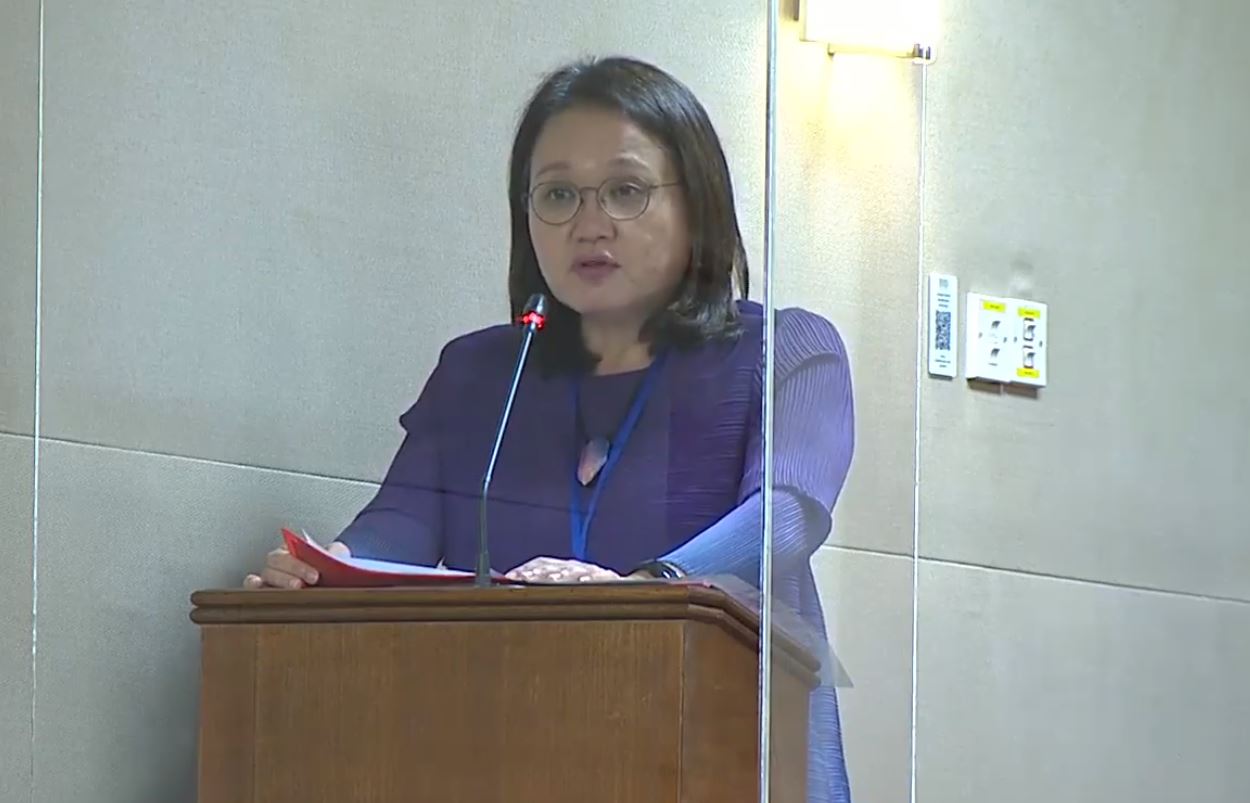
Photo: FB screencapture
Singapore -- Workers' Party (WP) Chairman Sylvia Lim called for more concrete action to progress on the country's journey towards a race-blind society in her first speech in the 14th Parliament on Tuesday (Sept 1).
Joining the debate on the President's address at the opening of Parliament, Ms Lim called on the Government to organise a national conversation about race, and review ethnic classifications and data, elections along ethnic lines, and the HDB's Ethnic Integration Policy (EIP).
The Aljunied GRC MP noted that many Singaporeans were arguably already ready for a non-Chinese Prime Minister and asserted that Singapore can go much further towards becoming a race-blind society with the right policies and signalling at the official level. Read her speech in full here:
https://www.facebook.com/workersparty/videos/594572364548141/
"Mr Speaker, the President’s Opening Address carried a paragraph on how Singapore may finally be at the point when the parameters of discussion about race may be widened. She said:
'Our multiracialism is still work in progress. Each successive generation will bring different life experiences and perspectives. In each generation, some will want to discuss sensitive issues afresh. Younger Singaporeans prefer talking about these issues more candidly and openly, which is a positive development. But the conversation needs to be conducted with restraint and mutual respect, because race, language and religion will always be visceral subjects.'
Sir, as I embark on my fourth term in this House, I recall my generation’s unique experience of multiracialism in Singapore, growing up in the 1960s and 70s. It was the era of Mr S Rajaratnam, whose mantra was that we were all Singaporean, 'regardless of race, language or religion'. In the 1980s and 90s, when the self-help groups such as Mendaki and CDAC (Chinese Development Assistance Council) were set up along ethnic lines, it was reported that Mr Rajaratnam disagreed, as he saw these as running counter to the vision of having a Singaporean identity where race, religion and language did not matter. Speaking personally, my own experience is that of a distinct shift between my childhood, where talk of race was discouraged, to today’s reality, of heightened race consciousness. Four years ago, in 2016, a Constitutional Commission chaired by the Chief Justice was set up, to make recommendations on how to ensure multi-racial representation in the office of the Elected President. In its report, the Commission noted as follows:
'The ultimate destination for our society should be a race-blind community where no safeguards are required to ensure that candidates from different ethnic groups are periodically elected into Presidential office. Equally, it seems to be common ground that Singapore as a society cannot affirmatively say that she has already 'arrived'. The question, then, is whether it would be prudent for safeguards to be put in place to ensure minority representation in the office, even as Singapore continues on the journey towards that destination. The Commission is of the view that it would be, especially since it is uncertain how long the journey will take.'
It seems to me that there is no real quarrel that we want to arrive at the destination of being a race-blind state. If this is our desire, it is only logical that we take concrete steps to move in this direction. We have had painful experiences of racial strife in the past. But, as the President acknowledges, society’s experiences and aspirations are not static, and each successive generation may yearn for, and even demand, a different approach.
To that end, I see some encouraging signs from the recent General Election. Several political parties fielded GRC teams consisting of a majority of non-Chinese candidates and polled well. I should particularly mention and thank the voters of Aljunied GRC, who re-elected a Workers’ Party team with three minority candidates out of five. I believe that Singaporeans voters are not fixated with race, and there is cause for optimism for the future.
In choosing to speak on this topic, I am acutely aware that there are different perspectives on matters of race, as DPM Heng Swee Keat acknowledged in this House yesterday. Nevertheless, I believe it is essential for us to move this conversation along, so that we inch ever closer towards the ultimate destination of being a race-blind society. Some may consider that we will never arrive at this destination. But we must ask ourselves how much closer we can be.
I also acknowledge at the outset that the Government’s management of these matters arises from legitimate concerns. The government is responsible for law and order, and fostering the building of a Singaporean identity in a population that is heterogeneous. It is a difficult task. However, as society evolves, all of us need to keep an open mind, to listen and understand the perspectives of fellow Singaporeans whose aspirations for Singapore may differ from our own.
Let me now move on to three areas which I think need to be addressed to move towards being a more race-blind society. These are (1) Ethnic Classifications and Data, (2) Elections along Ethnic Lines, and (3) the HDB Ethnic Integration Policy. I will call for an open review of these matters, to move us along in this journey towards being a race-blind society.
- Ethnic Classifications and Data
The Government continues to classify the population based on the CMIO or Chinese, Malay, Indian and Others – first used in colonial Singapore in 1824, nearly 200 years ago. Fast forward to today. To the Government’s credit, it has recognised the increasing numbers of mixed marriages, and in 2011 enabled children of mixed marriages to be registered with double-barrelled ethnicity. The Government has defended the CMIO classification as necessary to ensure that minority rights are safeguarded. The concept of “minority rights” itself is problematic, as it would be better if we could simply talk about citizenship rights. Furthermore, with more and more inter-ethnic marriages where the bride and groom are themselves of mixed parentage, I wonder how the CMIO classifications can withstand the test of time.
CMIO also informs the self-help groups such as CDAC, Sinda, Mendaki and the Eurasian Association. Over the years, these self-help groups have made significant contributions to uplift the less privileged, especially children. Notwithstanding the good work they have done, the fact is that they reinforce racial consciousness. I suspect that the differing sizes of the ethnic pools contributing to these organisations would affect the resources available, with CDAC probably having the most resources. To this end, CDAC has opened up some of its programmes on a race-blind basis. There is an opportunity here to come together as Singaporeans and contribute to a national pool, helping the less privileged on a race-blind basis. I’m aware of an effort to collaborate in this direction in Yishun called the Self-Help Group Centre, and hope we can go much further.
Sir, data on race is collected on many forms we complete. For all the race data the Government collects, it is selective on what it chooses to release. It probably has its reasons for this. Though my main point today is to move towards being race-blind, it is also true that data is needed to understand issues that may affect particular communities, with a view to narrowing the differences.
Let me give an example. As an MP, I filed a Parliamentary question 13 years ago, to ascertain the composition of the prison inmate population by ethnic groups; this is information that other governments release as a matter of course. The answer given was that the Prisons Department was unable to share the statistics. No explanation was given.
Sir, society at large should have an interest in whether those serving jail sentences are a microcosm of society or whether certain ethnicities are disproportionately being imprisoned. Why people land up in jail is often related to the state of their lives, such as whether they have stable income and family relationships. Such serious matters deserve wider study by persons outside the Government, such as researchers. There should be public awareness of any challenges faced by particular communities, and a whole-of-society approach should be encouraged. We should strive to foster a national culture, where every Singaporean is a stakeholder in the lives of fellow citizens.
2. Elections along Ethnic Lines
Since 1988, the Government decided to run Parliamentary elections with requirements for GRC teams to field candidates from designated minority communities. Constitutional amendments in the last term of Parliament have introduced an ethnic requirement for Presidential elections, based on a hiatus-triggered mechanism.
As stated by the Constitutional Commission in 2016, there should ideally be no need for safeguards to ensure that candidates from different ethnic groups are elected into Presidential office. This would be ideal for Parliamentary elections as well, when we are so race-blind that candidates of different ethnicities are elected naturally. These issues have been debated in the past, with arguments for and against ethnic requirements. However, that does not mean that these issues should remain as they are, over time and forever.
Such requirements tend to focus on minority representation, which can put an uncomfortable spotlight on minority candidates. To qualify for Parliamentary election, a minority candidate has to file an application to a committee to determine if the candidate is 'Malay enough' or 'Indian enough'. Indeed, the committee may come back to ask for evidence to be satisfied that the candidate meets the 'kosher' test.
I always wondered how I would fair, if one day I had to pass a test of 'Chinese-ness'. Being brought up in an English-speaking family and attending a mission school, I find myself constantly feeling inadequate about the state of my Mandarin. Before I entered politics, my knowledge of Chinese customs and practices was focused on celebrating Chinese New Year. I am not proud of my limitations, but being classified as part of the majority Chinese population, I am not required to prove who I am to stand in the GE. But it is not so for minorities.
Sir, we all value that our Parliament has cultural diversity, and that political parties do not campaign along racial lines. Indeed, there are penal laws against sedition and exciting disaffection between different communities. Whether having a multiracial Parliament needs to be maintained through the existing laws on minority candidates, or whether there are other ways to ensure candidates of diverse backgrounds are fielded, can be an area of review.
3. HDB Ethnic Integration Policy
The Ethnic Integration Policy (EIP) was introduced in 1989 'to ensure a balanced mix of ethnic groups in HDB estates, and to prevent the formation of racial enclaves'. There is no such requirement for private estates such as landed houses and condominiums. After 30 years of EIP, how well is it working?
From the Parliamentary Questions filed by MPs from both sides of the House, it is clear that the EIP has caused economic hardship over the years. When the quotas are reached, residents from minority communities can only buy or sell HDB flats from someone in the same community. For sellers, this can significantly reduce the numbers of offers available. It can also affect the transaction price, by as much as S$100,000 in one case I came across. Such a price differential could make all the difference to a family in financial need. Being stuck due to ethnic quota can leave residents in limbo for months. I know the HDB has allowed appeals on a case by case basis, but the default is that the quotas apply.
Newsletter
Get updates straight to your inbox
As the EIP was introduced only in 1989, it is useful to look at HDB estates where families moved in prior to 1989, when there was no EIP. For instance, areas like Bedok have clusters where the Malay population exceeded the EIP quotas. We should note that there did not appear to be extraordinary tensions or disorder there. It thus appears to me that some relaxation of the EIP is possible.
Fourteen years ago when the Workers’ Party suggested removing the EIP, it was met with a robust response from the ruling party. The suggestion was labelled a 'time bomb'. We were also aware that some Singaporeans did not agree with our suggestion. Today, half a generation later, I hope we can have a more progressive discussion on this issue. While the Government’s position is that the EIP was instituted for a noble purpose, its effect in particular cases has been discriminatory and needs to be addressed.
Sir, matters of race are no doubt sensitive issues that must be carefully handled. I do not pretend to have the answers that we need. However, what I am convinced of is that our discourse about issues of race has to move forward.
To this end, I suggest we take the time to have a wide national conversation about how we can move forward on race issues. Way back in 1967, the then Chief Justice Wee Chong Jin chaired a Constitutional Commission on Minority Rights. The time is ripe for us to have a national exercise to study what progress has been made by society since then towards multiracialism, and what further steps may be taken to move towards being a more race-blind society.
Sir, I am agnostic about the exact form of the review I am asking for. We should include academics with relevant expertise, and also ensure that there is fair representation of citizens across different age groups. The scope of the review should involve a wide collective reflection of where society is today on multiracialism, and what steps we can take towards this journey of being race-blind.
As for the scope of such a review, I can suggest that the following be considered:
1. The relevance of existing ethnic classifications such as CMIO;
2. The scope for more public disclosure of race-based data;
3. How not to reinforce tribal instincts in public policies and surveys;
4. Whether the current self-help groups should be amalgamated within a unifying national body, to pool national resources on a race-blind basis;
5. Whether multiracialism in elections should be preserved under the current framework or can less intrusive methods be used;
6. Whether the HDB’s Ethnic Integration Policy should be retained and, if so, how it can be modified for fairness.
Sir, by naming these areas, it is not my intention to be prescriptive or exhaustive. But we must start talking about these matters to move our racial discourse forward.
CONCLUDING OBSERVATIONS
Please let me make some concluding observations. I have spoken about Singapore’s continuing journey towards the destination of a race-blind society. I have also suggested a national exercise to review how this can be taken forward, with some specific areas that could be reviewed. When will Singaporeans be ready for a non-Chinese Prime Minister? Many would argue that we already are. Is a race-blind Singapore a fantasy? Singaporeans have already risen above tribal instincts on many occasions. We can go further, with the right policies and signalling at the official level."