
Haze affecting millions sparks Singaporean’s question: Could it be a ‘crime against humanity’?
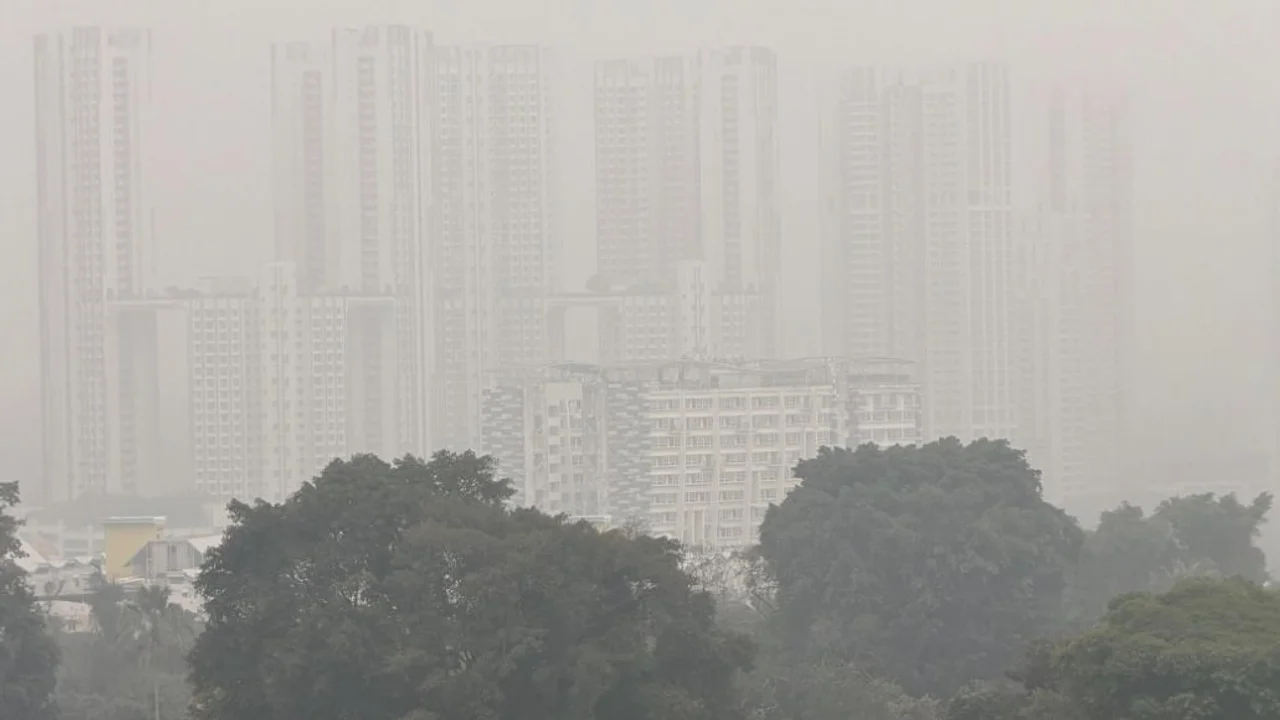
SINGAPORE: The number one topic on people’s minds these days is the haze. This year has been the worst in over a decade for transboundary haze, and Singapore has become one of the cities with the most air pollution across the globe.
On Thursday (Oct 15), the 24-hour Pollutant Standards Index (PSI) breached 200 in the west, with a very unhealthy reading (203). In the other four regions, readings were in the unhealthy band between 127 and 192.
Little wonder, then, that a local Reddit user has asked whether the haze can be considered among the crimes against humanity.
“It’s been happening almost every other year for decades, and not enough enforcement has been done,” wrote u/Scarletz_ in an Oct 14 post. They added that if war criminals can be indicted at the International Criminal Court (ICC) at The Hague, then the people behind companies “who intentionally slash and burn forests causing this haze to be held equally responsible.”
Noting that “the number of people impacted by this haze goes well into the millions,” they added that just having stepped outside for a while, their nose was already runny and their lungs felt “weird.”
“Can’t imagine what it’s like for those who are even more allergic or sensitive than myself,” the post author wrote.
Last weekend, Singapore’s Health Minister Ong Ye Kung said that there has been an increase over the past week in respiratory conditions in hospitals as well as at polyclinics.
According to a Greenpeace report earlier this month, there have been 4,390 additional hospitalisations in Indonesia due to acute respiratory illnesses this year so far, as well as at least 635,000 severe asthma attacks among children. Meanwhile, in Malaysia, there has been a 259% increase in asthma, and a 124% rise in upper respiratory tract infections.
To the Reddit user’s point, more than 12 million people have been blanketed by the haze, and because of the drought brought about by this year’s Super El Niño, conditions are not expected to improve soon.
A crime against humanity?
There is, however, a legal definition for the term “crimes against humanity,” and this year’s haze, caused by forest and peat fires in hundreds of thousands of hectares of land, though affecting so many, may not qualify as such.
According to the Rome Statute, the international treaty that founded the ICC, crimes against humanity intentionally cause great suffering or serious injury. Therefore, negligence, poor regulation, or an inability to control fires would fall short of this definition. Furthermore, it would need to be proven that those responsible for the haze knowingly carried out the fires as part of a systematic attack.
Nevertheless, there have been increasingly loud calls for accountability.
Newsletter
Get updates straight to your inbox
Interestingly, in a commentary for Bloomberg, one columnist wrote that Singapore could provide the solution to the severe haze problem.
“If Singapore were serious about tackling this problem, it would leverage Indonesia’s reliance on its financial sector. Plantation companies seeking listings, loans or capital there should be required to provide up-to-date maps of their concessions and suppliers. Singapore could impose the same basic principle that the European Union is now applying to palm oil: Produce must be traceable to the plots where it was grown, rather than disappearing into a mill where fruit farmed responsibly can be mixed with supplies of murkier provenance.
If anything good can come out of the pollution disaster of 2026, let’s hope it’s rules that can finally deliver accountability to those who profit from the burning of the rainforest,” wrote David Fickling on Oct 14. /TISG