
Govt audits, it's the same story every year


Procurement, contract management and proper scrutiny by approving authorities have remained key concerns during the last five years in successive annual reports of the Auditor General's Office (AGO).
“A significant proportion of AGO’s audit findings is in procurement and contract management. Every year we see instances of lack of financial prudence in procurement and poor management of contracts and agreements resulting in higher expenditure for goods and services, under-performance not detected, penalties for non-performance not imposed, revenues due not collected, and little or no assurance of value for money in projects carried out. I attribute this state of affairs to three main factors: laxity in procurement and contract management, lack of rigour in scrutiny by approving authorities, and light touch in ministry-statutory board dealings.” If this sounds like a portion from this year's AGO report, it is partly true. Partly, because the para is indeed from AGO's report, but the year was the financial year 2008/09 and the section was “Areas of Concern”. Now to the present. The Auditor-General (AG) in his recently submitted report to the President of Singapore for the financial year 2012/13 had observed lapses in five areas of “monitoring of performance of contractors, oversight of projects managed by external consultants, procurement, management of stocks and stores, and management of computer access controls”. The report further adds that “public sector entities could pay greater attention to and improve on their internal control systems” in these areas. The AG also notes that “as its audits are conducted on a test check basis, they do not reveal all irregularities and weaknesses. However, they should enable me to discover some of the occasional serious lapses.” Similarly, for the financial year 2011/12, the AGO's report under the section, Audit Observations, lists its main findings as, “A substantial portion of the audit findings pertains to procurement and contract management, and financial administration. The lapses and irregularities point to the need for the public sector agencies concerned to make improvements to the following areas: internal controls; administration of payments, including grant disbursements; management of contracts for works or services; and scrutiny by approving authorities.” In the same vein, a year before, in 2010/11, the AGO wrote in its report, “This year, many of the lapses found in the audits of Government ministries and statutory boards are in procurement. They arose when the Government procurement rules and principles of transparency, and open and fair competition were not adhered to.” The AG further says, “In the last four years, I have reported lapses in projects involving external parties appointed as project managers or consultants. This year’s audits found two projects managed by an external party where lapses were pervasive resulting in a Government department being grossly overcharged and making large payments for materials before delivery.” The AG also notes that “lapses found were largely due to administrative expediency taking precedence over financial prudence. The agencies concerned can do more to ensure adequate financial vigilance in their procurement and payment practices.” Finally, a look back at the AGO's report financial year 2009/10, reveals its findings as, “Most of the findings in this year’s Report relate to internal controls over the management of public funds, for example, in the areas of payments and refunds. Also reported are lapses and weaknesses in IT security in a number of public sector bodies.” It further added, ”In the last two years, AGO observed weaknesses in governance practices in a number of the statutory boards audited. Consequently, AGO carried out a horizontal audit of the governance framework and practices, and a survey on internal audit functions across statutory boards. The horizontal audit and survey culminated in the compilation of two guides, namely 'Good Governance Principles for Statutory Boards' and 'Implementation Guidelines on Internal Auditing in Statutory Boards'. These were presented to the Ministry of Finance (MOF) with a recommendation that they be considered for adoption by statutory boards upon which to model or improve their own governance framework and internal audit functions.” Meanwhile, Deputy Prime Minister (DPM) and minister for finance Tharman Shanmugaratnam in his reply in the Parliament on preventive measures against recurrent lapses, informed that government agencies have made special efforts to improve procurement processes since 2012. “The ministry of finance has also strengthened training programmes for procurement, and developed and disseminated check-lists to guide supervisors and officers on what to look out for at the various stages of the procurement process.” ”The procurement lapses cited in this year’s AGO Report are in fact all due to non-compliance with established rules, rather than gaps in the rules. It should also be noted that the majority of the findings concern lapses committed before 2012. This partly reflects AGO’s recent focus on government procurement in its audits, which have included looking at procurements in previous years,” he concluded. http://newzzit.com/stories/govt-audits-its-the-same-story-every-year“A significant proportion of AGO’s audit findings is in procurement and contract management. Every year we see instances of lack of financial prudence in procurement and poor management of contracts and agreements resulting in higher expenditure for goods and services, under-performance not detected, penalties for non-performance not imposed, revenues due not collected, and little or no assurance of value for money in projects carried out. I attribute this state of affairs to three main factors: laxity in procurement and contract management, lack of rigour in scrutiny by approving authorities, and light touch in ministry-statutory board dealings.”
If this sounds like a portion from this year's AGO report, it is partly true. Partly, because the para is indeed from AGO's report, but the year was the financial year 2008/09 and the section was “Areas of Concern”.
Now to the present.
Newsletter
Get updates straight to your inbox
The Auditor-General (AG) in his recently submitted report to the President of Singapore for the financial year 2012/13 had observed lapses in five areas of “monitoring of performance of contractors, oversight of projects managed by external consultants, procurement, management of stocks and stores, and management of computer access controls”. The report further adds that “public sector entities could pay greater attention to and improve on their internal control systems” in these areas. The AG also notes that “as its audits are conducted on a test check basis, they do not reveal all irregularities and weaknesses. However, they should enable me to discover some of the occasional serious lapses.”
Similarly, for the financial year 2011/12, the AGO's report under the section, Audit Observations, lists its main findings as, “A substantial portion of the audit findings pertains to procurement and contract management, and financial administration. The lapses and irregularities point to the need for the public sector agencies concerned to make improvements to the following areas: internal controls; administration of payments, including grant disbursements; management of contracts for works or services; and scrutiny by approving authorities.”
In the same vein, a year before, in 2010/11, the AGO wrote in its report, “This year, many of the lapses found in the audits of Government ministries and statutory boards are in procurement.
They arose when the Government procurement rules and principles of transparency, and open and fair competition were not adhered to.” The AG further says, “In the last four years, I have reported lapses in projects involving external parties appointed as project managers or consultants.
This year’s audits found two projects managed by an external party where lapses were pervasive resulting in a Government department being grossly overcharged and making large payments for materials before delivery.” The AG also notes that “lapses found were largely due to administrative expediency taking precedence over financial prudence. The agencies concerned can do more to ensure adequate financial vigilance in their procurement and payment practices.”
Finally, a look back at the AGO's report financial year 2009/10, reveals its findings as, “Most of the findings in this year’s Report relate to internal controls over the management of public funds, for example, in the areas of payments and refunds. Also reported are lapses and weaknesses in IT security in a number of public sector bodies.” It further added, ”In the last two years, AGO observed weaknesses in governance practices in a number of the statutory boards audited. Consequently, AGO carried out a horizontal audit of the governance framework and practices, and a survey on internal audit functions across statutory boards. The horizontal audit and survey culminated in the compilation of two guides, namely 'Good Governance Principles for Statutory Boards' and 'Implementation Guidelines on Internal Auditing in Statutory Boards'. These were presented to the Ministry of Finance (MOF) with a recommendation that they be considered for adoption by statutory boards upon which to model or improve their own governance framework and internal audit functions.”
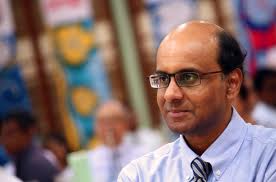
Meanwhile, Deputy Prime Minister (DPM) and minister for finance Tharman Shanmugaratnam in his reply in the Parliament on preventive measures against recurrent lapses, informed that government agencies have made special efforts to improve procurement processes since 2012. “The ministry of finance has also strengthened training programmes for procurement, and developed and disseminated check-lists to guide supervisors and officers on what to look out for at the various stages of the procurement process.”
”The procurement lapses cited in this year’s AGO Report are in fact all due to non-compliance with established rules, rather than gaps in the rules. It should also be noted that the majority of the findings concern lapses committed before 2012. This partly reflects AGO’s recent focus on government procurement in its audits, which have included looking at procurements in previous years,” he concluded.
[caption id="attachment_2752" align="aligncenter" width="490"]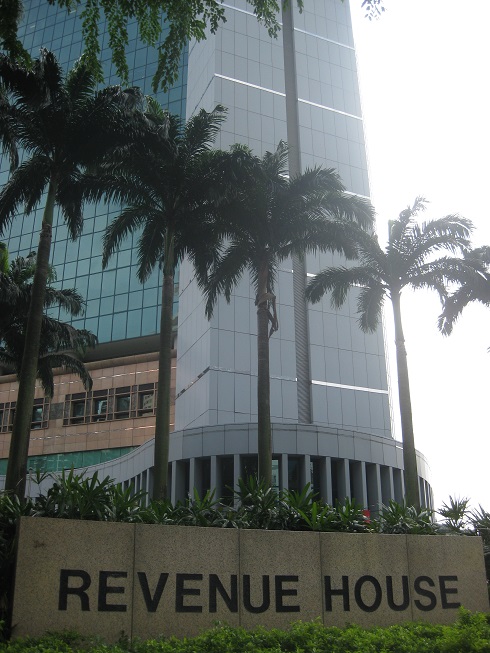 The Revenue House located at Newton Road which houses Singapore's Auditor-General's Office[/caption]
http://newzzit.com/stories/govt-audits-its-the-same-story-every-year