
Study shows that Singaporeans are paying more on travel bookings than prices advertised online

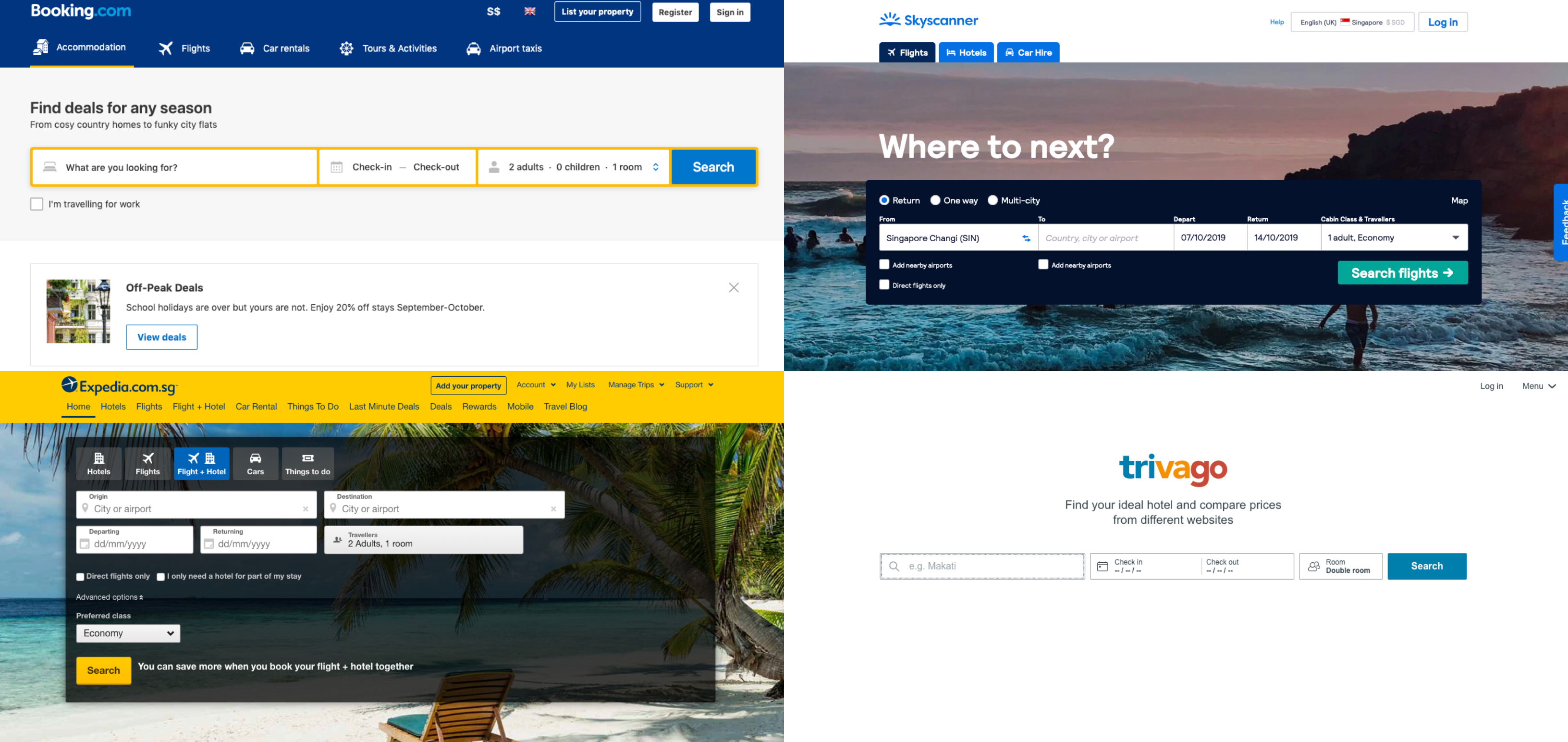
Many Singaporeans use online travel agents such as Expedia and Booking.com or metasearch engines like Trivago or Skyscanner. Photos: Booking.com, Expedia, Trivago and Skyscanner websites
SINGAPORE—After an extensive market study on the online travel booking sector in Singapore, the Consumer Commission of Singapore (CCCS) is proposing price transparency. The findings reported that 81 percent of the Singaporeans surveyed are paying more than they should for trip bookings.
More and more Singaporeans are using online booking services for arranging their trips, such as for flights and accommodation. This more frequent consumer usage prompted the CCCS to embark on a travel study on the online travel booking sector in Singapore.
The study, which covered 38 online travel websites and over 700 industry members and took nine months to complete, found that a good majority (81 percent) of Singaporeans are paying more for trips because of dodgy pricing and evasive marketing practices.
The CCCS noted that drip pricing and items being added on by default are some of the shifty practices that have led to consumer protection concerns.
The study, which ran from July 2018 to April 2019, found four common pricing and marketing practices that could mislead consumers:
- Drip pricing, by not disclosing both mandatory and optional charges upfront, can lure consumers into making a purchase based on incomplete price and restrict competition by making it harder for consumers to compare product offerings across suppliers;
- Pre-ticked boxes can result in consumers buying unwanted add-on products, as a result of failing to opt-out by unchecking the pre-ticked boxes;
- Strikethrough pricing can mislead consumers into making a purchase (or paying a higher price) should the comparison between a current and a crossed-out price be false or misleading;
- Pressure selling using false or misleading claims can create a false sense of urgency for consumers to make a purchase based on inaccurate information.
The report said that 81 percent of the 524 consumers surveyed had to pay a much higher price at checkout for airfare and accommodation bookings compared to the price originally advertised. This was due to additional mandatory fees.
Of the respondents, 18 percent said that final flights booking prices were always higher than the headline prices and 12 percent said the same for accommodations. Meanwhile, 63 percent acknowledged that prices were sometimes different on flights and 69 percent said the same for hotel bookings.
The commission has stated that mandatory fees should be included in the headline price so as to provide transparency, easing consumer price concerns.
Newsletter
Get updates straight to your inbox
As a result of these not-so-upfront practices, the CCCS is proposing a price transparency guideline for all types of consumer-facing industries. The guidelines contain the "dos and don'ts" for suppliers to not mislead customers.
The guidelines should help customers make informed choices and should promote security and safety when booking online.
The proposed guidelines, for which CCCS is seeking public feedback, should provide information on consumer protection laws and how some companies may try to infringe these laws. The guidelines will also detail how the CCCS determines whether pricing practices are transparent.
CCCS is inviting the public to give their comments and suggestions on the proposed guidelines until October 21. -/TISG